


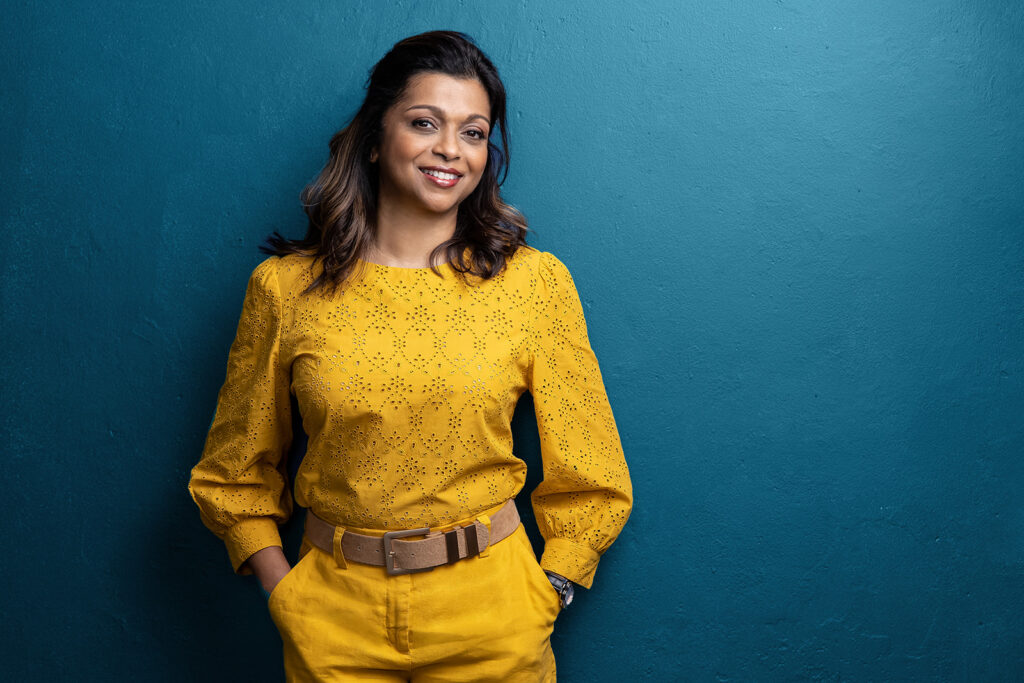


A corporate headshot is built to make people trust you. An acting headshot is built to get you cast. They can look alike at a glance, but they’re answering different questions, and that changes almost every decision in the session.
The corporate one says “you can rely on this person”. The acting one says “here’s what this person could play tomorrow”.
Here’s where they split, and when one photo can do both jobs.
What’s the main difference between corporate and acting headshots?
Who’s looking at it, and what they’re deciding.
A client, a recruiter or a new colleague looks at a corporate headshot to decide whether you seem capable and easy to deal with. A casting director looks at an acting headshot to decide whether you could be right for a role, and whether the person who walks into the audition will match the photo.
So the corporate photo can be polished. The acting photo’s got to be honest.
How do the clothes and styling differ?

Corporate dresses up. Acting dresses down.
- Corporate: dress for the most important meeting you go to, usually a jacket or a collar, in colours that suit your industry and the rest of your team.
- Acting: wear plain, well-fitting tops in solid colours that suit you, with no logos, busy patterns or anything that tells a story before you do.
- Both: fit matters more than price, and fine checks or narrow stripes can shimmer on screen.
Casting directors want to imagine you in a role, so the styling stays quiet. Our guide to what to wear covers both, including a section for actors.
Should you smile in an acting headshot?

Often you’ll want one of each.
A corporate headshot aims for a single expression: confident, warm and approachable, with your eyes to the camera. An acting headshot often needs range. Commercial casting tends to favour a warm, open, smiling look, while drama for stage and screen tends to favour something stiller and more serious, so many actors carry one of each.
Our guide on whether to smile in a headshot covers the corporate side in more detail.
How much retouching is too much?
Less for actors than for anyone.
Corporate retouching tidies stray hairs, shine and creases without changing your face. Retouching for actors should be lighter still, because the photo has to look like you walking into the room today, freckles, lines and all. A headshot that flatters you too much wastes the casting director’s time, and yours.
Our page on headshot retouching explains what gets tidied and what’s left alone.
Want an exact price?
Book a free 15-minute consult - no obligation, just a clear quote and a plan.
Do the framing and background change?
A little.
Corporate headshots are usually head and shoulders, cropped to match the rest of the team, on a background that suits the company. Acting headshots are often framed a touch looser, from the chest up, on something plain and uncluttered that won’t date. Either way, leave room around the head, because both end up cropped to a square for a profile or a casting thumbnail.
The traditional casting print is an 8×10, but most submissions are digital files now.
How often should each one be updated?
Actors update more often.
For most professionals, about every two years is a sensible default. Actors should update whenever their look changes, whether that’s a new haircut, a colour change, a beard or a few years of ageing, because the casting director expects the face in the photo to walk through the door. Our guide on how often to update your headshot goes into the timing.
Can one photo do both jobs?
Sometimes one way, rarely the other.
A natural acting headshot in a plain top often works well on LinkedIn, especially for actors who also teach, coach or run a business on the side. A polished corporate headshot rarely works for casting. The jacket, the brand-matched background and the boardroom finish make you read as one type, which narrows the roles you’re seen for.
If you need both, plan the looks before the session and shoot them in one booking. At Hero Shot, individual sessions run from 20 minutes to 2 hours, which leaves room for a business look and one or two acting looks. Our guide to actor headshots covers what casting wants in more detail.
What other types of headshots are there?
Most fall into a handful of jobs.
- Personal branding photos go beyond the headshot to show you at work, for your website, social media and speaker profiles.
- Editorial portraits use more of the setting to tell a story, often for media or an annual report. Our comparison of headshots and editorial portraits explains when each fits.
- Model portfolio shots sell a look rather than a person, which is a different job again. See our guide to model headshots.
- Team headshots are corporate headshots done as a matching set, so everyone sits side by side on the website without looking out of place.
Start from where the photo will be used, and the type usually chooses itself.
If you’re an actor who also needs a business photo, or the other way round, get in touch and tell us where the photos will go. We’ll suggest how to split the session.
Found this useful? Make Hero Shot Photography a preferred source on Google.


