


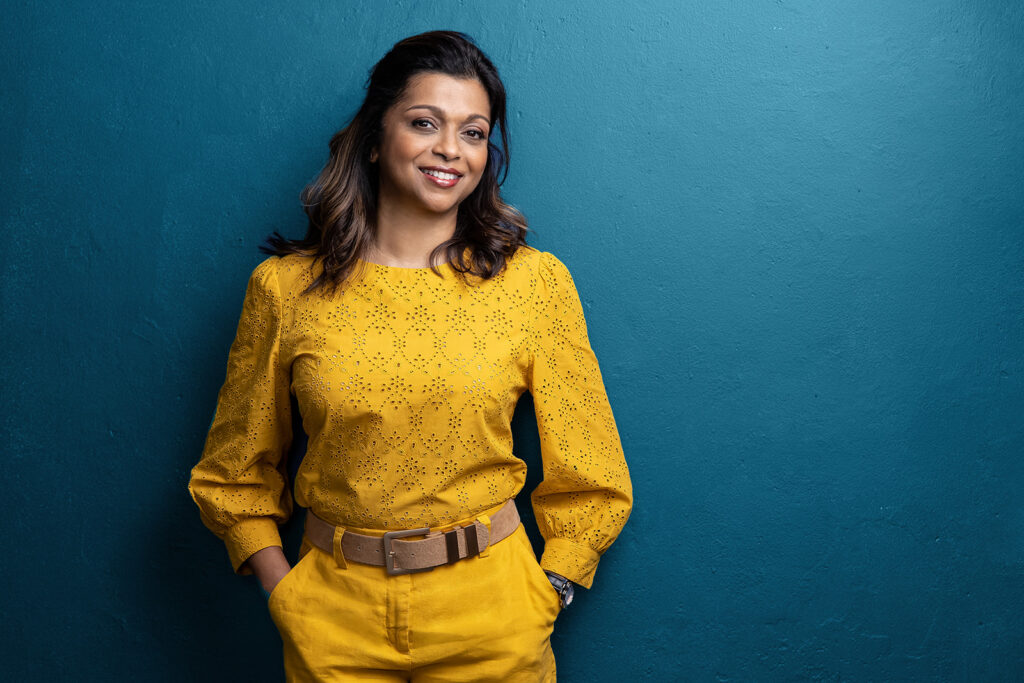


Dress for the most important meeting you go to, the way people in your industry actually dress for it. That’s the whole rule.
Most people assume a formal headshot means a full suit and tie, and a casual one means whatever’s clean. Neither is quite right. Formality in a photo comes from a couple of pieces of clothing. The most useful of them is a jacket, because it goes on and comes off in a second.
So if you can’t decide, you don’t have to. Shoot both.
What’s the difference between a formal and a casual headshot?
Mostly the jacket and the collar. The photography barely changes.
The light, background and crop can stay the same. What changes is the outline of your shoulders and the line around your neck. A structured jacket gives a crisp, squared shape. A crew neck or open collar gives a softer one.
Expression plays a part too. A relaxed outfit with a serious face looks oddly stern, so let your expression match the clothes.
Try the thumbnail test. Picture the photo at LinkedIn circle size, about the width of a fingertip. Nobody can see the weave of your fabric or the brand of your shirt at that size, but everyone can see whether there’s a jacket and whether there’s a collar.
That’s where most of the formality lives.
Do you need a suit or a blazer?
No. A jacket does nearly all the work, and you may not need that.
A headshot is cropped somewhere between the chest and the top of the head, so your trousers never make it into the frame. Whether the jacket belongs to a matching suit or is a separate blazer makes no visible difference. The same goes for a tailored jacket over a plain top or dress: the structure at the shoulder is what reads as formal.
You don’t need to buy a suit for a headshot. If you never wear one to work, a photo of you in one won’t look like you. Clients and colleagues will meet the person in the knit, and the gap between the photo and the person will show.
If you’d like the option without the shopping trip, borrow a jacket that fits from a friend or colleague. An unstructured jacket is also a good middle ground, because it gives you shape without looking like you’re about to sign a merger.
Buy a suit when your job needs one. The photo doesn’t.
Tie or no tie?

Only if you’d wear one to that important meeting.
A tie is the most formal thing you can put in a headshot. It’s also the piece most likely to look like a costume when it isn’t your everyday norm. A crisp, open collar under a jacket reads as formal enough for most roles.
If the partners in your firm wear ties to client meetings, wear one. If they don’t, leave it at home.
Still unsure? Bring the tie, shoot a few frames with it, then take it off.
Which industries expect which?
Finance, legal and consulting expect a jacket; technology, creative and trade roles usually don’t. These are typical expectations rather than rules:
- Finance and professional services. People in these fields usually wear a jacket over a shirt or fine knit with a dark neutral base, because clients tend to expect a consistent team page.
- Consulting. Consultants usually need one plain, structured version for clients, even if the office dresses down.
- Legal. Lawyers usually look right in something conservative and quiet, such as solid navy or charcoal with a crisp collar.
- Real estate. Agents often do best in a solid top that picks up the agency’s colour without looking like a uniform.
- IT and technology. In technology the collar can usually go, and a clean crew neck, merino knit or unstructured jacket works well.
- Construction and trades. Builders and trades often need two versions, a plain shirt and branded hi-vis, because tenders and website bios tend to use different images.
Not-for-profits sit at the other end. Approachability usually beats formality there, so warmer colours and softer fabrics tend to suit. Leaders have a few extra considerations of their own, which our guide to executive headshots covers.
Think about the people you pitch to. They set the level, more than whoever sits next to you at work. If you can’t tell, bring both and let the photographer see you in each before the first frame.
What does “casual” mean in a professional headshot?

Considered without being formal. It doesn’t mean weekend.
A casual corporate headshot still needs clothes that look chosen on purpose. Good options include a solid merino crew or quarter zip, an unstructured jacket over a plain tee, a deeper-wash denim shirt, or a clean, plain polo for site and trade roles.
The things that let it down are worn collars, faded prints, logos and anything you’d wear to mow the lawn. A hoodie at thumbnail size looks like you were caught on your way to the gym.
Solid colours do better than patterns in both versions, and the guide to the best colours for a headshot explains why. For fit, fabric and what to pack, see what to wear for a headshot.
Can you get both in one session?
Yes, and it’s the easiest way to settle the question.
Jacket on gives you a formal version. Jacket off gives you a less formal one, in the same light, against the same background, and by then your expression’s had time to relax. You can use the formal one for the website and tenders and the relaxed one for LinkedIn or a speaker bio. Because the light and background don’t change, the two versions sit together naturally.
What matters is what goes underneath. A plain shirt or fine knit that looks finished on its own makes both versions usable.
Decide on the day. Retouching tidies stray hairs, shine and creases, but it can’t fix very different lighting or angles, and it won’t add a jacket you didn’t wear.
If you want genuinely different outfits, ask for a longer session. Individual sessions run from 20 minutes to 2 hours, and our page on individual headshots explains the options.
A full session is more than you need if it’s only for LinkedIn. A guided 15-minute virtual session over FaceTime on your own phone, retouched onto a matching background, covers it. Keep it to one outfit and make it the one you’d wear to your most important meeting.
Picking between the two afterwards is a separate decision. Our guide to choosing the best photo from your session walks through it.
Want an exact price?
Book a free 15-minute consult – no obligation, just a clear quote and a plan.
How should a team decide?
Set a palette, then pick one level of formality for everyone.
Mixed, unmatched team sets are the most common problem we’re called in to fix, and a split between blazers and crew necks is one of the quickest ways to get one.
If you’re organising the day, you’ve probably already had the email asking whether people “have to” wear a blazer. A strict dress code pushes the developer who hasn’t worn a jacket since a cousin’s wedding into one that doesn’t fit, and it shows. A palette works better. Ask for dark neutrals or soft solids, no logos and no busy patterns, so the team looks like it belongs together without everyone matching.
Then agree on jacket on or jacket off for the whole set. That’s the one choice people shouldn’t make individually, because a team page that’s half blazers and half crew necks looks like two different companies.
If your teams need both, such as a building firm that uses one image for tenders and another for its website, shoot both and keep them in separate sets. Our page on corporate headshots for companies covers how a team day runs.
Consistency comes from the brief. Nobody needs to own the same suit.
If you’re still stuck between the jacket and the jumper, get in touch and tell us what you do and who you meet, and we’ll tell you what we’d wear.
Found this useful? Make Hero Shot Photography a preferred source on Google.
Getting your Sydney team photographed?
We run "Staff Headshot Days" - 30+ people, one consistent look, minimal disruption.


