


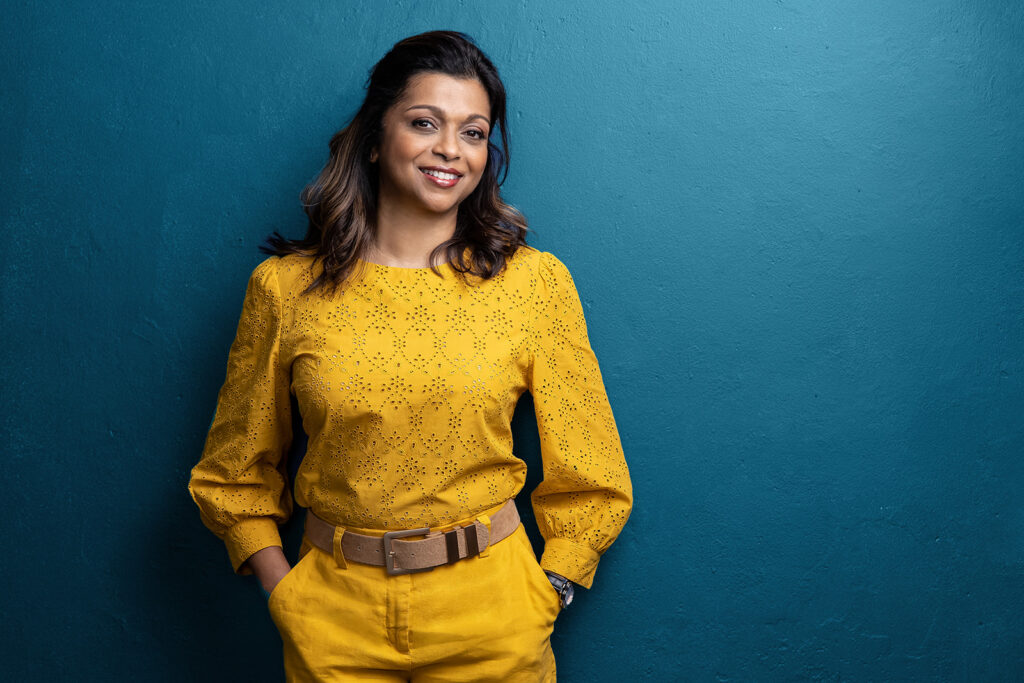


Head and shoulders, with your eyes about a third of the way down from the top of the frame. That’s the standard, and it’s a good place to start.
But a headshot rarely lives in one place. The same photo might end up as a circle on LinkedIn, a square on a team page and a wide banner on a website, and each one trims it differently.
So good framing is really about two things: how the photo looks, and what’s left after someone else crops it.
What does a standard headshot frame look like?

Most professional headshots follow the same few rules.
- Head and shoulders. The frame usually runs from just above your head to around the middle of your chest. That’s close enough to see your face clearly and wide enough to show you’re dressed for work.
- Eyes in the upper third. Your eyes sit roughly a third of the way down from the top, not in the middle of the frame. That’s where people look first, so that’s where they should land.
- A little room above your head. Not much. Too much empty space makes you look small in the frame, and too little makes the top of your hair feel squashed.
- Your face near the centre. Slightly off-centre can feel more relaxed, but a headshot is about you, so you shouldn’t be pushed to one edge.
How tight should a headshot be?
That depends on what the photo has to do.
A tighter crop puts all the attention on your face and expression. It’s common for actors, because casting is about the face. Our guide to corporate headshots vs acting headshots covers how differently the two get used.
A slightly wider crop shows more of your shoulders and outfit, which reads as a little more formal. Most corporate headshots sit here.
At Hero Shot, our Express session is a close-up crop from above the elbows. The longer sessions add crop variety, from close-up through to full-length where it’s needed.
Want an exact price?
Book a free 15-minute consult – no obligation, just a clear quote and a plan.
Where shouldn’t a headshot be cropped?
A few places make a photo look accidental.
- Right under the chin. It can make your head look like it’s floating.
- Exactly at a joint. A crop that lands right on the elbows or wrists looks awkward, so it’s better a little above or below.
- Through the top of your head, by accident. Some tight, editorial headshots trim the top of the hair on purpose, and it works when the rest of the framing is confident. When it’s only a few millimetres, it just looks like a mistake.
- Off one shoulder. If one shoulder runs off the edge and the other doesn’t, the photo looks lopsided.
Why does one headshot need several crops?
Because every platform trims it differently.
- LinkedIn shows your photo as a circle. The corners disappear, so your face needs to sit comfortably in the middle with some space around it. Our LinkedIn photo size guide has the dimensions.
- Team pages usually use a square or vertical crop. Everyone needs the same head size and eye line, or the page looks uneven.
- Website banners and speaker slides often need a wide version, with room on one side for text.
That’s why a photographer usually shoots a little wider than the final crop. You can crop a photo tighter later, but you can’t crop it wider.
Most people need fewer final images than they expect: one main headshot, one alternative crop, and sometimes a wider shot for a website banner. We cover the rest in what happens at a headshot session.
How do you keep framing consistent across a team?

Agree on it once, then stick to it.
Consistent framing means the same distance from the camera, the same eye line and the same crop for everyone, whether they were photographed on the first shoot day or joined two years later. Nobody notices it when it’s right. Everyone notices when it’s wrong.
We keep a record of each company’s background, lighting, framing and crop, so new starters can be photographed to match. There’s more on how that works on our corporate headshots for companies page.
Getting your Sydney team photographed?
We run "Staff Headshot Days" - 30+ people, one consistent look, minimal disruption.
Can you reframe a headshot you already have?
Only in one direction.
A photo can be cropped tighter, straightened or shifted slightly, as long as there are enough pixels left. It can’t be made wider. If the original was framed tight and you now need a wide version for a website banner, the shoulders and background that were never there can’t be added back convincingly.
If you’re trying to rescue an older photo, our guide to turning a regular photo into a headshot explains what’s realistic.
Before your next shoot, tell the photographer where the photo is going: LinkedIn, a team page, a speaker program or a website banner. It changes how they frame you. And if you’re not sure what you’ll need, get in touch and we’ll help you work it out.
Found this useful? Make Hero Shot Photography a preferred source on Google.


