


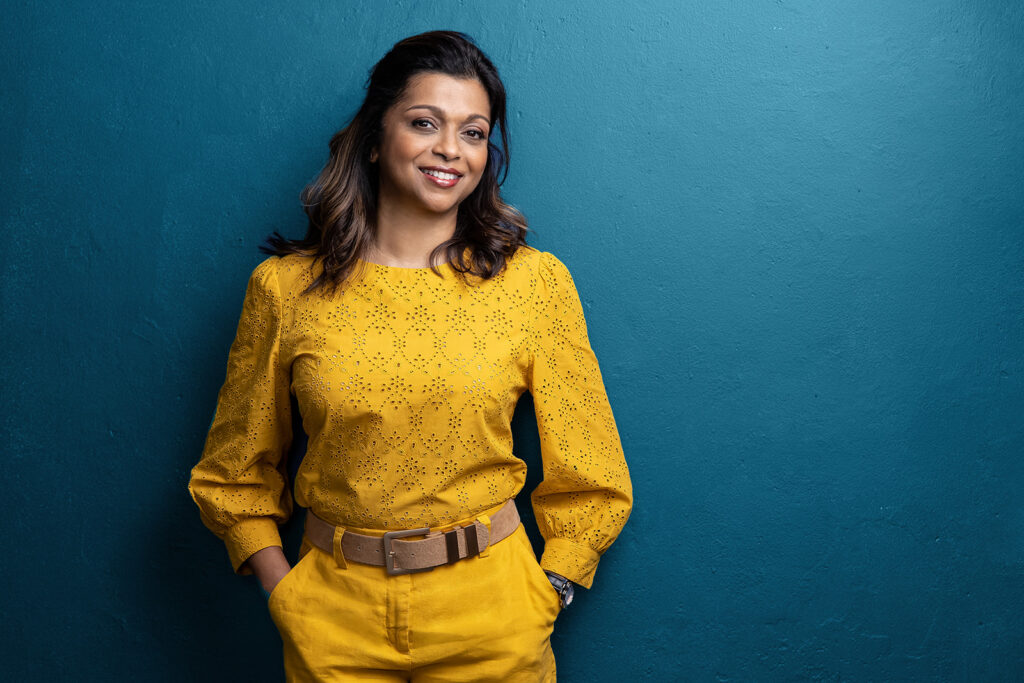


Some retouching is normal. Changing your face isn’t.
That’s the whole answer, really.
A professional headshot should look like you on a good day, not like a younger, smoother cousin who happens to share your name.
The trouble is that “a good day” and “a different person” sit closer together than most people think. Here’s where we draw the line, and how to tell when someone else hasn’t.
Do professional headshots get retouched?
Almost always, at least a little.
A camera sees everything: the blemish that turned up that morning, the shine from a warm walk to the studio, a stray hair catching the light. In person, nobody notices. In a sharp, well-lit photo that gets looked at closely, those things can pull attention away from your face.
Light retouching tidies them up.
Done well, you won’t be able to say what changed. You’ll just look like yourself, slightly more rested.
What does light retouching actually fix?
Things that are temporary. If it wouldn’t be there next week, it’s fair game.
- Blemishes and redness that weren’t there last week and won’t be there next week.
- Shine on the forehead, nose and chin.
- Flyaway hairs and the odd strand that crossed your face at the wrong moment.
- Lint, dust and pet hair on dark jackets, which the camera finds with frightening accuracy.
- Small reflections in glasses, where the shoot couldn’t avoid them completely.
- A crooked collar or a twisted necklace chain.
None of that changes who you are.
It removes the distractions, so people look at your expression instead.
What should never be retouched out?
Anything permanent. If someone would notice it was missing when they meet you, leave it in.
- The shape of your face. Jawlines, noses and chins stay as they are.
- Your age. Lines can be softened a touch. They shouldn’t disappear.
- Your skin’s texture. Skin has pores. Skin without them looks like a shop mannequin.
- Your colouring. Eye colour, skin tone and grey hair stay true.
- Features you’ve decided are part of you. Freckles, a scar, a birthmark. That’s your call, and tell your photographer before the retouching starts.
The video-call test
Put the retouched photo next to your face on a Teams or Zoom call. If they look like the same person, you’re fine.
If the photo looks noticeably younger, slimmer or smoother than the person on the call, it has gone too far, and everyone you meet will feel it even if they can’t say why.
Why does it matter so much for work?

Because your headshot is a promise about who’s going to turn up.
LinkedIn’s own rules say a profile photo must reflect your likeness. Clients, recruiters and colleagues use your photo to recognise you in a lobby or on a call, and a mismatch makes the first meeting slightly awkward for everyone.
Actors feel this most of all. Casting directors need the person in the audition room to match the photo exactly, which is why actor headshots are retouched more lightly than corporate ones. Our guide to actor headshots goes into what casting teams expect.
How can you spot an over-retouched headshot?
Look for these. Once you’ve seen them, you’ll notice them everywhere.
- Skin with no texture at all, like a smooth plastic finish.
- Eyes that glow brighter than anything else in the photo.
- Teeth whiter than the shirt.
- A face that doesn’t match the neck, in tone or in smoothness.
- A halo around the hair where the background has been cleaned up too aggressively.
- Someone who looks ten years younger than the person you met last week.
How much retouching do our sessions include?

It depends on the session.
Our individual headshot sessions step up from light retouching in the Express session, which cleans up skin and hair imperfections, to detailed retouching in Elite and advanced retouching in Elite Plus. The aim at every level is the same: you, on a good day.
Some people ask for more, and some ask for less. Tell us which before we start, whether it’s leaving the freckles, keeping the grey or softening a shadow under tired eyes. We follow specific requests wherever we can, and it’s much better to say so up front than to be surprised by the result.
If you already have a photo you like but not everything in it, our retouching service can work on an existing image, including one taken on a phone, to tidy the background, adjust the lighting or clean up the details.
Want an exact price?
Book a free 15-minute consult - no obligation, just a clear quote and a plan.
Is retouching the same as a beauty filter or AI?
No, and the difference shows.
Filters and AI smoothing work on the whole face at once, so skin goes waxy, eyes go glassy and hair edges turn strangely perfect.
A person retouching by hand fixes the specific things that need fixing and leaves the rest alone.
AI tools are getting better, and we cover the trade-offs in AI headshots vs professional photography. The test doesn’t change, though: it still has to look like you.
Can good photography reduce the need for retouching?
Yes, and that’s the better route.
Soft, flattering light hides more than any retouching tool can fix, and good direction gets a relaxed expression that no software can add later. Turning up rested, with a clean shirt and hair you’re happy with, takes care of most of the rest. There’s more on that in how to look natural in a headshot, and if you wear glasses, read headshots with glasses before you book.
If you’re not sure how much retouching you’d want, get in touch and ask. And if your current headshot already looks like you on a good day, it’s doing its job.
Found this useful? Make Hero Shot Photography a preferred source on Google.


