


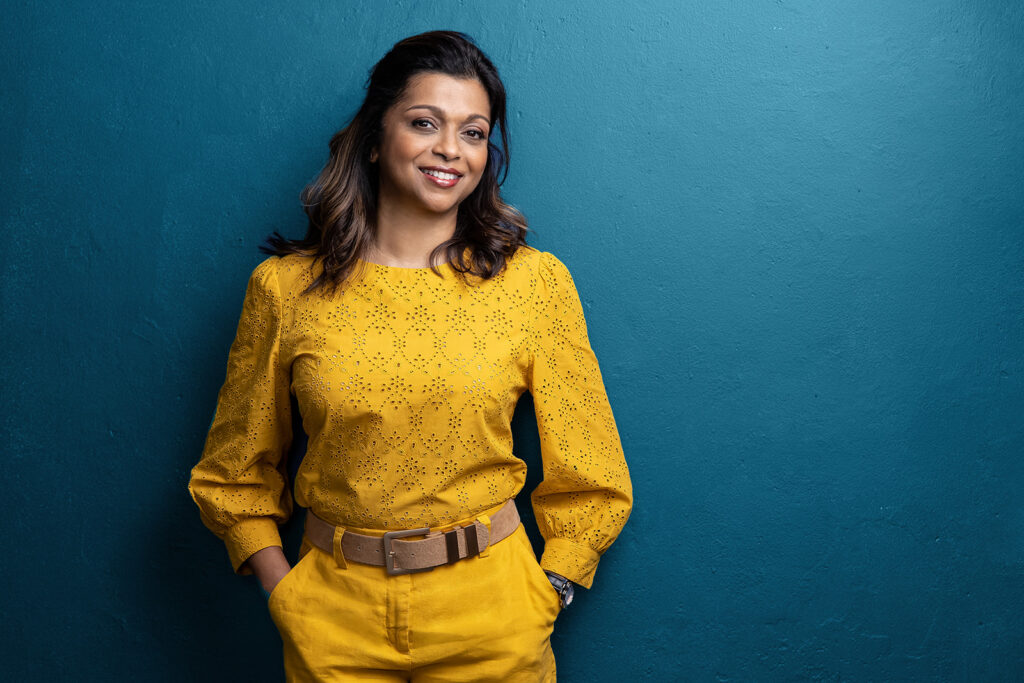


A corporate headshot for a woman works when it looks like the capable person who walks into the meeting, on her best ordinary day. Most of that comes down to an outfit that fits and sits flat at the neckline, a little make-up for shine, simple jewellery and an expression that someone coaches out of you on the day.
It’s a working business photo, not a glamour shot. It’ll sit on LinkedIn, a team page, a speaker bio or a board page, usually next to your name and a few lines about what you do.
The list of decisions is shorter than you’d think. Here they are, in the order you’d actually prepare.
What makes a good corporate headshot for a woman?

It looks like you, now, on a good day.
That means a current photo, sharp eyes, a simple outfit that fits and an expression that suits the job. A partner at a law firm and a consultant running her own practice want slightly different expressions, but both want a client to look at the photo and recognise the person who turns up.
The rest is detail.
A fair bit of that detail is the photographer’s problem anyway: the lighting, reflections in glasses, the stray hairs that get tidied in retouching.
What should you wear for a corporate headshot?

Something that fits, with a neckline that sits flat.
As our guide on what to wear for a headshot explains, a head-and-shoulders crop from the collarbone up only shows about a hand’s width of clothing, so fit and neckline matter more than colour. Crew, boat, shallow V and open collars all work, as long as the neckline doesn’t crowd your chin or gape when you lean forward.
Sleeves are the safer choice for corporate and LinkedIn headshots. Sleeveless is fine for a tight crop, or for a brand that’s relaxed on purpose.
Bring one polished option, usually a blazer over a solid top, and one softer one, like a fine knit or a plain blouse. Wearing the blazer for some frames and not others gives you a formal and a casual version from one session. Choose fabrics with a bit of body over clingy jersey, and leave tight stripes and small checks at home, because they can shimmer at thumbnail size.
Then do the daylight test. Take a quick phone photo of each outfit near a window and look for shine, cling, visible bra straps or singlet lines, and shoulders that don’t quite fit.
Retouching can tidy a crease. It can’t re-tailor a jacket.
How should you dress for your industry?
Dress the way you would for your most important client.
Law, finance and government suit a structured blazer and a simple neckline. Tech and consulting suit polished smart casual. Health suits calm, tidy clothes, often in softer colours, and creative fields get more freedom with texture, as long as it looks intentional.
Not sure? Bring a classic corporate look and a slightly relaxed one.
If you’d like a bit more personality in the frame, fun corporate headshots can still look professional, though that’s a different brief.
Which colours work best?

Navy, charcoal and deep jewel tones suit most people.
Mid-to-deep shades photograph cleanly. Pale pastels and beiges close to your skin tone can wash out, leaving a face floating above a vague suggestion of an outfit.
Under a blazer, pick an inner layer that contrasts near your face. A dark, high neckline reads as executive, while an open neckline adds a little approachability.
If the top is bold, keep the jewellery simple. Our guide to headshot colours for women goes shade by shade.
What jewellery and glasses should you wear?

Less than you’d wear to dinner, plus your everyday glasses.
Choose earrings and a watch, or earrings and a necklace, but not all three. Earrings of about 8 to 20 mm photograph cleanly, while ones that reach the jawline start competing with your face. Matte or brushed finishes behave better under lights than glinting ones, necklaces should sit flat, and stacked bangles are best left in the bag, partly for the look and partly for the noise.
The simplest check is the thumbnail test: shrink the photo to LinkedIn circle size, and if the accessory is the first thing you notice, it’s too much. Our guide to headshot accessories for women has more examples.
If you wear glasses every day, wear them. The photographer adjusts the lights and your head position to remove reflections in camera, and a few frames without them lets you choose later. There’s more in our guide to headshots with glasses.
Should you wear your hair up or down?

Let your neckline decide.
High necklines suit hair pulled back, in a sleek ponytail, a low bun or half-up. Open necklines suit hair down. Long hair tends to work best mostly behind the shoulders, where it frames your face instead of covering the outfit.
Watch a fringe that sits on your eyebrows or touches your glasses, because it can shadow your eyes. Go easy on heavy gel, wax and shine sprays, which catch studio lights.
Book a cut or colour about a week before, not the day before. The headshot hairstyle guide runs through more options.
Small flyaways get tidied in retouching. A restyle doesn’t.
Do you need professional hair and make-up?

No, it’s optional.
If you do your own make-up well, you’ll still get a great headshot. Aim for even skin, defined features and controlled shine, which usually means slightly more matte and defined than your everyday look, built up in thin layers.
A few things behave differently under flash. SPF-heavy moisturisers and silica-heavy powders can leave a white cast, so check yours before the day. Powder the T-zone only, since heavy powder can settle into skin. One coat of mascara is plenty, and if you wear glasses, skip heavy product on the lower lashes. This isn’t the week to try new skincare.
Our guide to make-up for headshots covers the detail, and the studio keeps mirrors and matte powder on hand for quick fixes.
A make-up artist helps most when you want several looks quickly, and adds about an hour to the session. For one corporate look, your own make-up and a pressed powder will usually do the job.
How do you pose for a corporate headshot?

You don’t need to know before you arrive.
The photographer coaches angles in real time and shows you frames as you go. That inner voice asking what on earth to do with your hands gets a straight answer early on.
The basics are simple. Lean into the conversation, not into the camera. Bring your face forward slightly and lower your chin a few millimetres. Let your shoulders relax and put your weight on your back foot.
The expression to aim for is a listening smile: the one you’d have while a client explains a problem you’re about to help with, rather than a grin held for the count of three. There’s more in our guide to natural headshot poses.
Want an exact price?
Book a free 15-minute consult – no obligation, just a clear quote and a plan.
What happens on the day?

You get set up, coached and shown results as you go.
A session for an individual runs from 20 minutes to 2 hours, depending on how many looks you want. The lighting and background are tested first, and the studios have a range of backdrops. Then it’s a series of small adjustments to angle and expression, with frames on screen so you can see what’s working.
Afterwards you choose your favourites, and retouching tidies stray hairs, shine and creases without changing your face. Final images usually arrive 3 to 5 days after you’ve made your selections.
None of this needs to be perfect when you walk in. If you’re unsure about an outfit, bring it and decide in front of the camera.
What if your company has booked a team headshot day?

Then the setup’s already fixed, and that’s the point.
On a team day the background, lighting and crop stay the same for everyone, so the team page matches whether you’re photographed first thing or last. If you’re curious how company headshot days run, that page covers it. What you still control is fit, neckline, hair and expression.
Keep earrings small, because long ones swing between frames and stand out on a page of otherwise matching photos. And bring a second top in case yours is a near-perfect match for the backdrop.
A floating head is a strange look for a finance manager.
Getting your Sydney team photographed?
We run "Staff Headshot Days" - 30+ people, one consistent look, minimal disruption.
What should you pack?
Not much, and it all fits in one bag.
- Two tops. Bring one polished and one softer, both in solid colours.
- A blazer, if you wear one. Check it fits across the shoulders before you leave home.
- Your own lip product and pressed powder. Pack the ones you’ve already tested, not something new.
- Glasses and a microfibre cloth. Fingerprints show up far more clearly under studio lights than they do in the mirror.
- Simple jewellery in a pouch. That way you and the photographer can choose in front of the camera.
If you’d like a second opinion on what to bring, get in touch and we’ll help you sort it out before the day.
Found this useful? Make Hero Shot Photography a preferred source on Google.


