


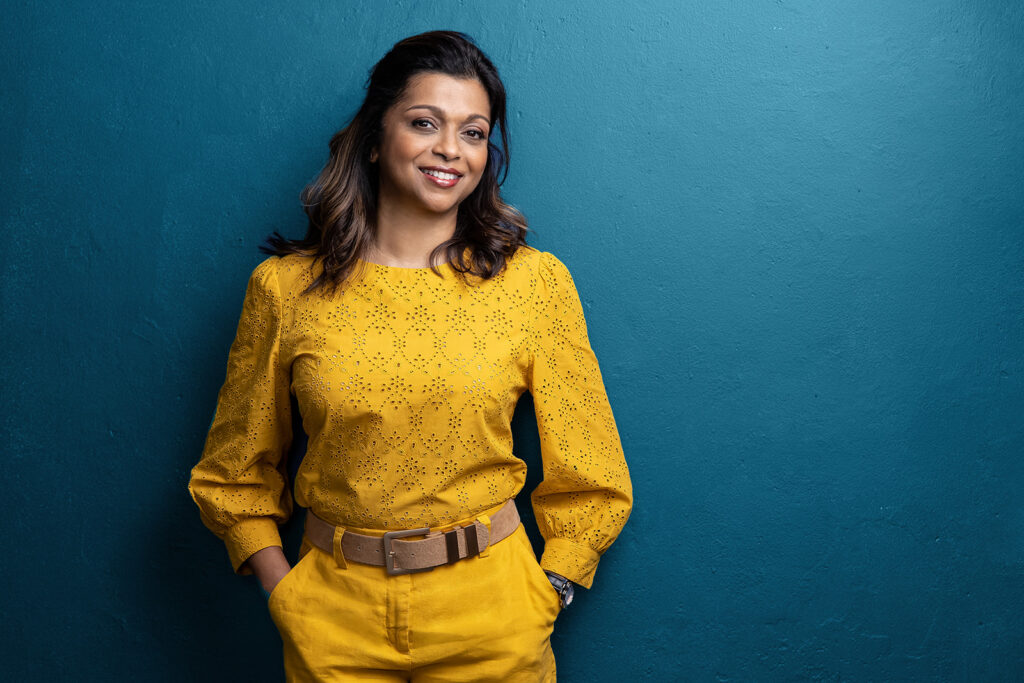


Bring two or three outfits in solid, complementary colours, each one dressed for a different part of your working life. Most people already own them.
What catches people out is treating a personal branding shoot as a headshot with a few extra photos. A headshot needs one good top. A branding shoot builds a library you’ll keep drawing on: the website, social media, a speaker bio, press and PR. So each outfit has a job to do.
That means planning around where the photos will be used and who’ll see them.
Your favourite shirt gets a vote, not a veto.
What should you wear for a personal branding photoshoot?
Clothes clients would recognise you in.
Think of the shoot as a few ordinary moments from a working week, then dress for each one. There’s the look for meeting a new client, the one for a stage or a workshop, and the one for when the door’s shut and the real work starts.
Our personal branding page sums up the rest: two or three outfits in solid, complementary colours, no logos or busy patterns, and accessories for variety.
How is dressing for a branding shoot different from a headshot?

Far more of you ends up in the frame.
If all you really need is a new photo for LinkedIn and your email signature, you don’t need a branding shoot or three outfits. An individual headshot session runs from 20 minutes, and one good top covers it.
A headshot is cropped somewhere around the chest, so the wardrobe question is mostly collar, neckline and colour. A branding shoot adds half-length and full-length frames: hands on a laptop, sitting at a table, walking through a doorway or talking across a desk. That puts the waistband, the way a jacket bunches when seated, socks and shoes all in the picture.
The outfits also have to work as a set. An about page might use a frame from the first look while a LinkedIn post six months later uses one from the third. Both should read as the same person running the same business.
Fabric, fit and necklines are covered in our headshot wardrobe guide, and all of it still applies.
Your shoes, though, are now on camera.
How many outfits should you bring?

Two or three, each tied to a use.
A Mini Branding session runs for 1.5 hours for a single person, in and around the studio. It delivers six retouched Hero Shots and allows up to five looks or changes. That sounds like a lot of outfits, but it isn’t five full changes. Taking off a blazer, adding a knit over the same shirt or swapping the shirt under the same jacket all read as different looks on a website, and they’re quick.
Give each outfit a job before packing it:
- The about page. Wear the outfit people would describe you in if someone asked.
- Client-facing. Wear what you’d put on for a first meeting with the best kind of client.
- Speaking or press. Go a notch sharper, because this one will sit next to an event program or a published article.
- Behind the scenes. Wear what you actually work in, rolled sleeves and all.
If the scenes aren’t settled yet, our personal branding photoshoot ideas will help build the shot list first.
The wardrobe follows from it.
Do you need new clothes for a branding shoot?
Usually not, and buying a whole wardrobe for one shoot can backfire.
The clothes you already wear on good work days tend to photograph best, because you move naturally in them and aren’t thinking about a tag or a waistband between frames. A new wardrobe bought for a single shoot can leave you looking like a slightly more polished stranger in your own photos. It’s a jolt when the person in the meeting doesn’t quite match the one on the website. If something’s genuinely missing, like a jacket that fits or a plain top in a colour you don’t have, buy that one piece and wear it a few times before the shoot.
Buy the gap, not the wardrobe.
Which colours work best for branding photos?

Solid colours that sit comfortably next to your website.
Neutrals make the best base: navy, charcoal, white, cream, camel and olive. They don’t compete with your face, and the same image works on a homepage, a slide deck and a printed brochure. Bring brand colours in as an accent, such as a shirt under a neutral jacket, a scarf or a tie. Head to toe in brand colours tends to look like the logo got dressed and came along.
Here’s a quick test. Open the website on a laptop, hold each outfit up beside the screen and see whether it looks like it belongs there. Our guide to the best colours to wear for a headshot explains why some shades flatter skin and others drain it.
If an outfit fights your homepage, leave it at home.
Should your outfits match your brand and your clients?

Yes. Dress like the version of you clients hire.
A financial adviser whose clients expect a suit should wear the suit, even if they’re happier in a polo. A builder who meets clients on site should bring the hi-vis. If the job means an apron, scrubs or a uniform, include it. A branding library is meant to show you at work, and clients will notice if that’s missing.
Formal or casual depends on who’s looking. A consultant pitching to a bank and a designer pitching to start-ups are dressing for different rooms, and the photos should know which room they’re for. Our post on formal versus casual headshots walks through that decision.
If the photo doesn’t look like a normal Tuesday, it won’t look like you.
Does it matter whether you shoot in the studio or on location?

Yes. The setting decides what stands out and what blends in.
The Petersham studio is bright and has several sets, so plan which outfit goes on which set. Our studios have a range of backdrops, so ask which ones are planned and bring at least one outfit that contrasts with each.
On location, think about what the day involves and what’s behind you. If there’s walking between spots, wear shoes you can walk a few streets in. If it’s cold, a good coat or knit can become one of the looks, so choose it as carefully as the rest. Then check the contrast. A pale shirt against a sandstone wall or a green jacket against a hedge will make you disappear into the scenery. For location shoots we’ll guide you on permits, logistics and timing for the best light, and that timing also tells you how warmly to dress.
You want to stand out from the setting.
What about shoes, accessories and glasses?

Bring them all. They’re in more frames than you’d think.
Shoes show up in every full-length and seated frame, so bring the pair that actually goes with each outfit, clean and broken in. Accessories are the easiest way to add variety: a watch, a scarf, a second jacket. Keep jewellery simple, because a statement necklace repeated across a whole gallery stops being a statement.
If you wear glasses every day, wear them in most of the photos. Our post on wearing glasses in a headshot goes into the detail.
That’s the face your clients know.
What should you avoid wearing?
Logos, busy patterns, creases and anything else that pulls attention away from you.
The camera is less forgiving at full length than in a headshot, so the edit is best done at home.
- Logos. Leave off branding of any kind, including other companies’ logos, which have no place on your own website.
- Busy patterns. Fine checks, tight stripes and loud prints pull the eye and can look busy on screen.
- Creases. Press everything the night before and hang it, because folded shirts show every line at full length.
- Anything that doesn’t fit today. Dress for the body you’re bringing, since that’s the one clients will meet.
- Very trend-led pieces. This year’s must-have can make a library feel old well before it’s finished being used.
If you’d hesitate to wear it to a client meeting, leave it out.
Want an exact price?
Book a free 15-minute consult – no obligation, just a clear quote and a plan.
How should you get ready for the day?
Sort the styling while you’re planning, then pack properly.
Do you need hair and make-up?
No, it’s optional.
Hair, make-up and styling are add-ons, and the full-day session includes a make-up artist as part of a three-person team. Raise it on your prep and strategy call, and you’ll get an outfit checklist and prep guide beforehand. Our post on preparing for a personal branding session goes further. If you do your own make-up well, you’ll still get great photos, and our make-up guide for headshots explains what the camera exaggerates.
Most men don’t need it.
How should you pack your outfits?
Tried on, pressed and on hangers.
- Try it all on. Try on each full outfit, shoes included.
- One hanger per look. Hang every outfit separately so nothing gets crushed in the bag.
- Bag the accessories. Clip a small bag to each hanger with that outfit’s jewellery, watch and belt.
- Bring a lint roller. Dark jackets collect fluff on the way in.
- Plan the order. Put the quickest changes first so the session builds momentum before the bigger swaps.
Pack it like you’ll be changing in a hurry, because you will.
If you’d like a second opinion on your outfits before you book, get in touch and we’ll talk it through.
Found this useful? Make Hero Shot Photography a preferred source on Google.


